


By Erin Bamer | Nebraska Examiner
GDP growth poised to be a positive driver in lawmakers’ task to fill $471 million budget hole
LINCOLN — For the second quarter in a row, Nebraska’s federally measured Gross Domestic Product grew by about 5%, according to the U.S. Bureau of Economic Analysis.
On Friday, the BEA released its report on statewide GDP growth for the third quarter of 2025, which includes tallies for July, August and September. The report showed that Nebraska’s GDP grew 5%, tying the state with Iowa and Vermont for the 13th-highest GDP growth over that time.

“The data is in — and Nebraska’s economy is knocking it out of the park,” Gov. Jim Pillen said in a social media post celebrating the BEA report Friday.
The real GDP nationally rose about 4.4% for the quarter, making it the highest overall growth so far in 2025.
In 2025, Nebraska’s GDP has been a tale of extremes. In Q1, Nebraska tied with Iowa for largest losses of GDP at 6.1%, but the state bounced back in Q2, seeing its state GDP grow about 5.2% — the sixth highest growth nationally.
Although Nebraska’s overall GDP is up for 2025, state tax revenues haven’t mirrored that growth. Nebraska’s tax receipts for July, August and September were a mixed bag, but altogether posted a net decline of roughly $15 million compared to prior economic forecasts.
In the ongoing 60-day legislative session, state lawmakers are working to adjust the state’s two-year budget to fill a projected $471 million budget deficit. That goalpost may move even farther when Nebraska’s Economic Forecasting Advisory Board meets in February, as the latest tax receipts for November and December are down about $46 million.
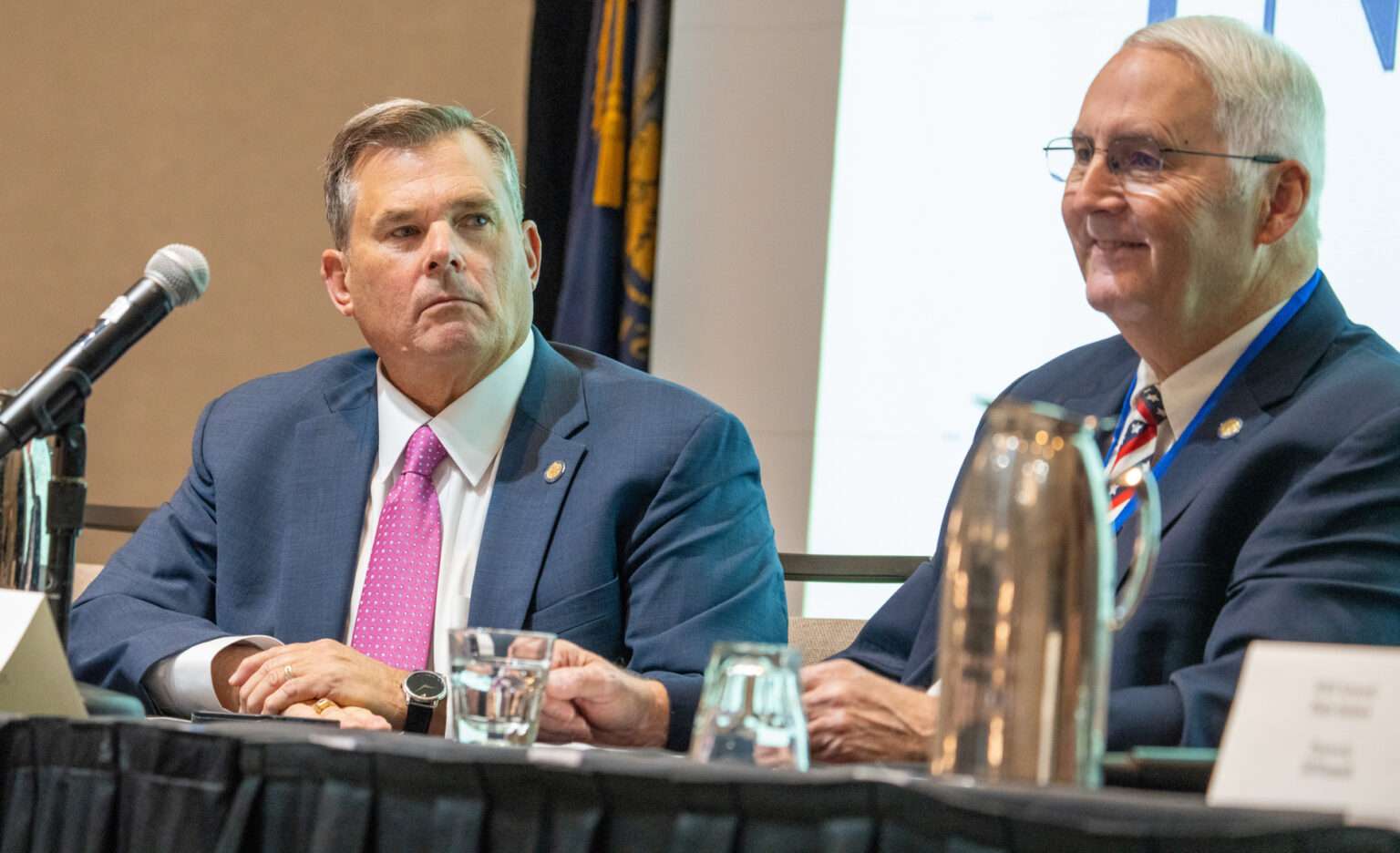
“January’s receipts will be quite telling,” said State Sen. Brad von Gillern of the Elkhorn area, chair of the Nebraska Legislature’s Revenue Committee. “Then the forecasting board, which meets on February 27 … that will be very telling. That will determine our destiny for the rest of the session.”
Even though the latest tax receipts are down, von Gillern added that the full impact is relatively minor compared to Nebraska’s overall budget. The state’s general fund appropriations are set at about $5.5 billion per fiscal year.
Legislative Fiscal Analyst Keisha Patent said many factors contribute to GDP growth and the state’s monthly tax receipts, but not all of them align with one another.
For example, the BEA report notes that increases in agriculture added to several states’ GDP growth, including in neighboring states Kansas and South Dakota, which saw the two largest growth rates for that quarter.
While Nebraska has an expansive ag industry, Patent noted that the state’s tax receipts incorporate collections from all industries.
Still, Patent said, Nebraska’s GDP growth will be a positive driver that could help balance the impacts of lower-than-expected tax receipts. She said her office incorporates GDP changes as a factor in the reports they present to the state forecasting board.
State Sen. Rob Clements of Elmwood, chair of the Legislature’s Appropriations Committee, said Nebraska’s GDP growing 5% is a very good sign that the state’s economy is stable.
“More economic activity means more sales taxes and more income taxes in the long run,” Clements said. “That’s really reassuring to me.”