


By Allison Peck
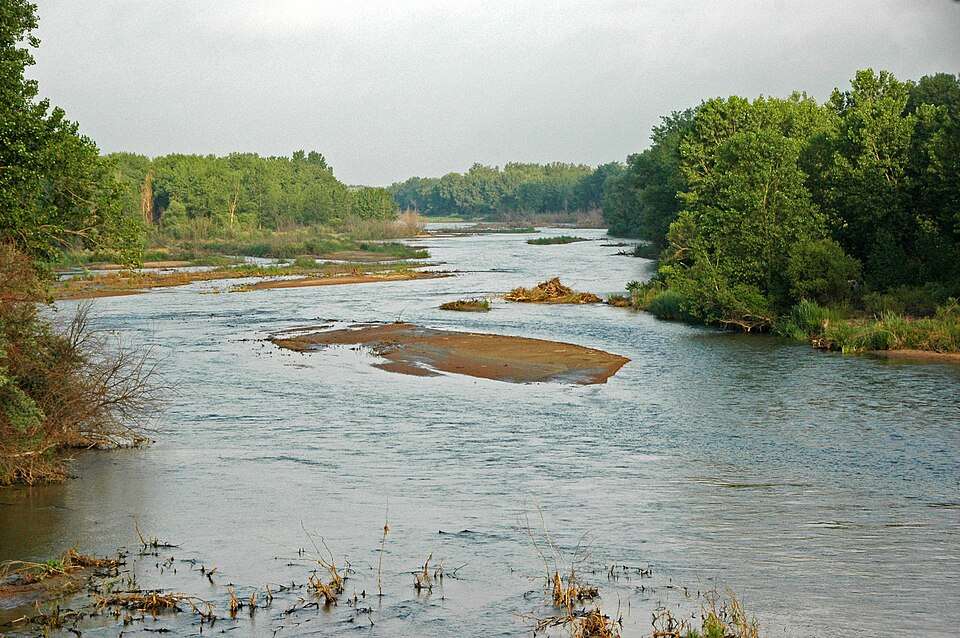
Colorado is accusing Nebraska of violating the same interstate water compact Nebraska says Colorado has breached, putting competing claims over the South Platte River before the U.S. Supreme Court.
LINCOLN — A legal fight between Nebraska and Colorado over the South Platte River has expanded, with Colorado filing counterclaims accusing Nebraska water users of improperly reducing flows in both states.
Colorado filed its answer to Nebraska’s complaint and its counterclaims on Sept. 28 with the U.S. Supreme Court. Colorado also filed a motion seeking dismissal of portions of Nebraska’s case.
The case is an original action before the Supreme Court, which agreed in June to hear Nebraska’s claims against Colorado over the 1923 South Platte River Compact and Nebraska’s efforts to develop the Perkins County Canal.
Nebraska sued Colorado in 2025, alleging Colorado has violated the South Platte River Compact by allowing water users in Colorado to divert water that Nebraska says is protected under the agreement.
Nebraska’s complaint centers in part on the irrigation season, which runs from April 1 through Oct. 15. Under Article IV of the compact, Nebraska has a specified priority for 120 cubic feet per second of South Platte River flows under certain conditions.
Nebraska argues Colorado has allowed junior water users, including groundwater users, to divert water in ways that reduce the amount reaching Nebraska.
Nebraska has also challenged Colorado’s actions involving the non-irrigation season, from Oct. 15 through April 1, and the water Nebraska says is available to it through the Perkins County Canal provisions of the compact.
The Nebraska Attorney General’s Office said when the Supreme Court agreed to hear the case in June that Nebraska is seeking to enforce its rights under the compact and resolve Colorado’s alleged interference with the canal project.
Colorado denies Nebraska’s allegations.
In its Sept. 28 filing, Colorado argues the compact does not guarantee Nebraska a fixed amount of water. Instead, Colorado says Nebraska has a priority over certain Colorado water users at certain times and under specific conditions.
Colorado also argues its water administration system accounts for groundwater diversions through replacement water and augmentation plans and maintains that the system protects senior water rights as well as Nebraska’s compact rights.
But Colorado’s response goes further than simply defending against Nebraska’s lawsuit.
The state filed two counterclaims against Nebraska.
The first involves Lodgepole Creek, a tributary of the South Platte River.
Under Article III of the compact, Colorado says it has the exclusive right to use and benefit from a two-mile portion of Lodgepole Creek located in Nebraska immediately north of the Colorado-Nebraska border.
Colorado alleges Nebraska water users are pumping groundwater that is hydrologically connected to that portion of the creek, reducing the amount of water available to Colorado.
According to Colorado’s filing, there are at least 30 active irrigation wells within two miles of the state line along Lodgepole Creek. Colorado says those wells irrigate thousands of acres and are depleting flows in the portion of the creek reserved to Colorado.
Colorado further alleges Nebraska does not require adequate replacement of the water removed by most of those wells.
Those are allegations made by Colorado in its counterclaim and have not been established by the Supreme Court.
Colorado’s second counterclaim involves the South Platte River itself.
The state alleges Nebraska groundwater pumping is reducing flows in the South Platte inside Colorado.
Colorado points to at least 19 active irrigation wells in Nebraska just north of Julesburg, Colorado, and less than three miles from the South Platte River. Colorado says those wells irrigate thousands of acres and are hydrologically connected to the river.
According to the filing, Colorado believes the pumping reduces South Platte flows within Colorado and can require Colorado to curtail its own water users to meet Nebraska’s rights under the compact.
Colorado cited 2021 as an example of those obligations, saying it curtailed Colorado water users with priority dates junior to Nebraska on 88 days during the irrigation season because of its responsibilities under Article IV of the compact.
The dispute also involves Nebraska’s planned Perkins County Canal.
The South Platte River Compact allows Nebraska to construct a canal originating in Colorado to divert water for use in Nebraska, primarily during the non-irrigation season.
Article VI provides for a canal with the ability to divert 500 cubic feet per second from the lower section of the South Platte between Oct. 15 and April 1, subject to the terms of the compact.
Nebraska has been pursuing the Perkins County Canal as a way to protect its South Platte water entitlement.
The Nebraska Department of Water, Energy and Environment says the state has been authorized to spend $628 million on development, construction, management and operation of the canal and associated water-storage facilities. The agency says the primary purpose is to protect Nebraska’s non-irrigation-season flows under the compact.
The project is moving through design and federal permitting. DWEE reported earlier this year that the project was 60% designed and was on track for operation by the end of 2032.
Colorado argues Nebraska’s canal claims are premature and says the state has not yet constructed the canal. Colorado also disputes Nebraska’s claim that Colorado has interfered with the project’s development.
In its counterclaims, Colorado asks the Supreme Court to award the state damages it says resulted from Nebraska’s actions.
Colorado also asks the Court to order restrictions on Nebraska surface-water diversions and groundwater pumping that affect the disputed portion of Lodgepole Creek or South Platte flows within Colorado.
Among other requested remedies, Colorado asks the Court to prevent Nebraska pumping or diversions from reducing irrigation-season flows below the compact’s 120-cfs threshold, and to award interest and costs.
The Supreme Court has not ruled on either state’s substantive allegations.
The court’s docket shows Nebraska’s case was filed in July 2025. The Court invited the U.S. solicitor general to weigh in, and the federal government filed a brief in May 2026. On June 29, the Supreme Court granted Nebraska permission to proceed with its complaint. Colorado was then given until Sept. 28 to respond. Colorado filed its answer, counterclaims and motion to dismiss on that date.
The dispute now places Nebraska’s claims against Colorado and Colorado’s claims against Nebraska in the same Supreme Court case, with both states arguing that the other is failing to comply with the South Platte River Compact.
The case is State of Nebraska v. State of Colorado, No. 22O161, an original action before the U.S. Supreme Court.
The allegations described in this story are claims made by Nebraska or Colorado in court filings and have not been adjudicated by the Supreme Court.