


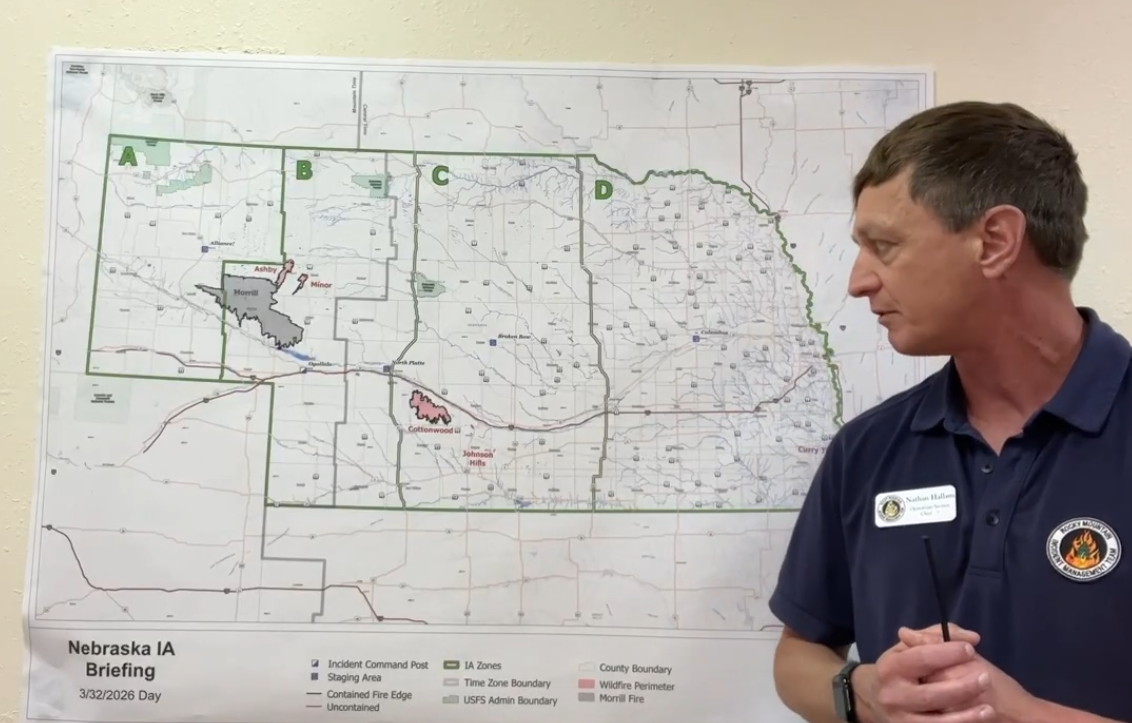
Fire crews continue to make steady progress on western Nebraska wildfires, with the Ashby Fire now nearing full containment and cooler, wetter weather giving firefighters a brief window to regroup.
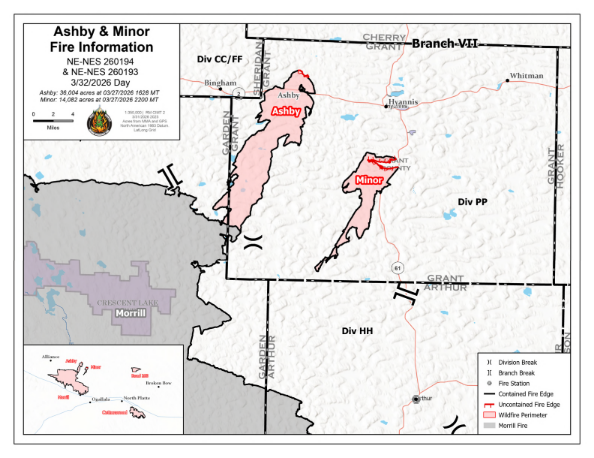
According to the Rocky Mountain Complex Incident Management Team 2, the Ashby Fire is now 97 percent contained at 36,004 acres, while the Minor Fire remains 85 percent contained at 14,082 acres. Officials say the remaining uncontained portion of the Ashby Fire consists of buried heat that will continue to smolder until it can be fully extinguished.
Operations Section Chief Nathan Hallam said recent weather conditions have allowed crews to ease operations and shift focus.
“We have some moisture that came in the area, and for us in operations, this gives us a chance to regroup, get our resources kind of tidied up, get them trained up and ready for when things do dry out,” Hallam said.
With fire activity decreasing, crews have reduced staffing on both the Ashby and Minor Fires. Resources are now focused primarily on patrolling and monitoring remaining hotspots.
“We wound up combining those two fires into one Division Supervisor, reduced the staffing on that and they'll be out there today patrolling and monitoring,” Hallam said.
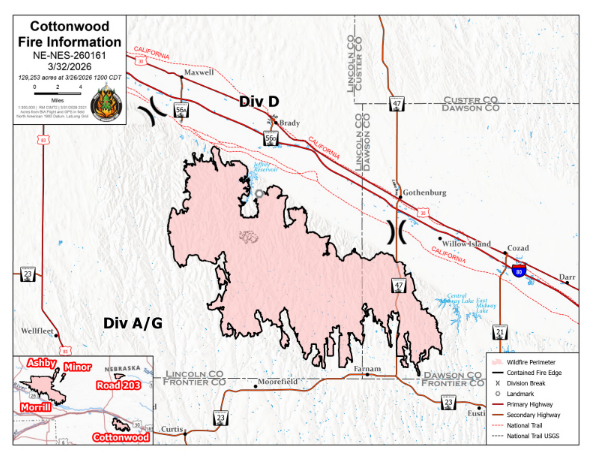
The Cottonwood Fire, which burned more than 129,000 acres, remains 100 percent contained. Firefighters continue to monitor the interior of the fire and extinguish any remaining heat where it is safe to do so. No smoke was observed Tuesday, and crews are beginning to demobilize from that fire.
“Resources are timing out there and we're returning back home slowly, progressively heading back to their home units,” Hallam said.
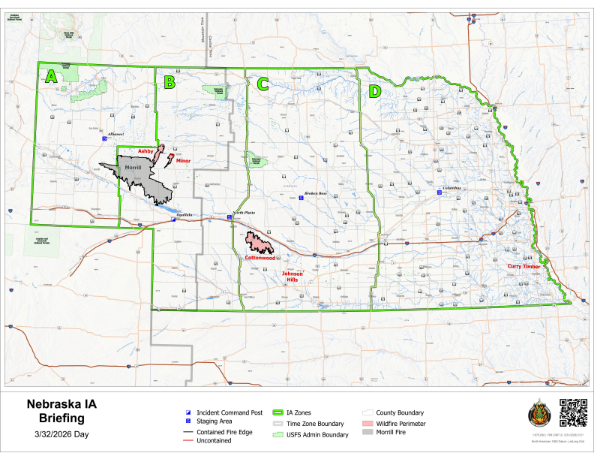
Fire crews were briefly called back to the Johnson Hills Fire near Bertrand Tuesday after flames spread into corn stubble, highlighting ongoing concerns about agricultural impacts.
“That corn stubble, if it does burn, that will sterilize the soil and you won't be able to grow your crops for years,” Hallam said. “That could be millions of dollars revenue loss.”
Crews were able to quickly assist local firefighters and secure the area.
Statewide, initial attack resources remain positioned in Alliance, Ogallala, North Platte, Broken Bow and Columbus to respond quickly to any new fire starts. However, activity has remained low, with no major new fires requiring assistance overnight.
Weather conditions are expected to remain favorable through midweek, with cooler temperatures, increased humidity, and the potential for measurable precipitation. Officials say those conditions will help limit fire behavior in grasses, but caution that dry brush and timber could still support rapid fire spread if new fires ignite.
Hallam said the break in conditions is temporary.
“We have some time to breathe here, regroup,” he said. “But we are looking at the long-term forecast. Things will be drying back out 48 to 72 hours out from today.”
Fire officials continue to urge residents to remain cautious and report any new fires immediately, noting that Nebraska’s vegetation remains historically dry despite recent moisture.